
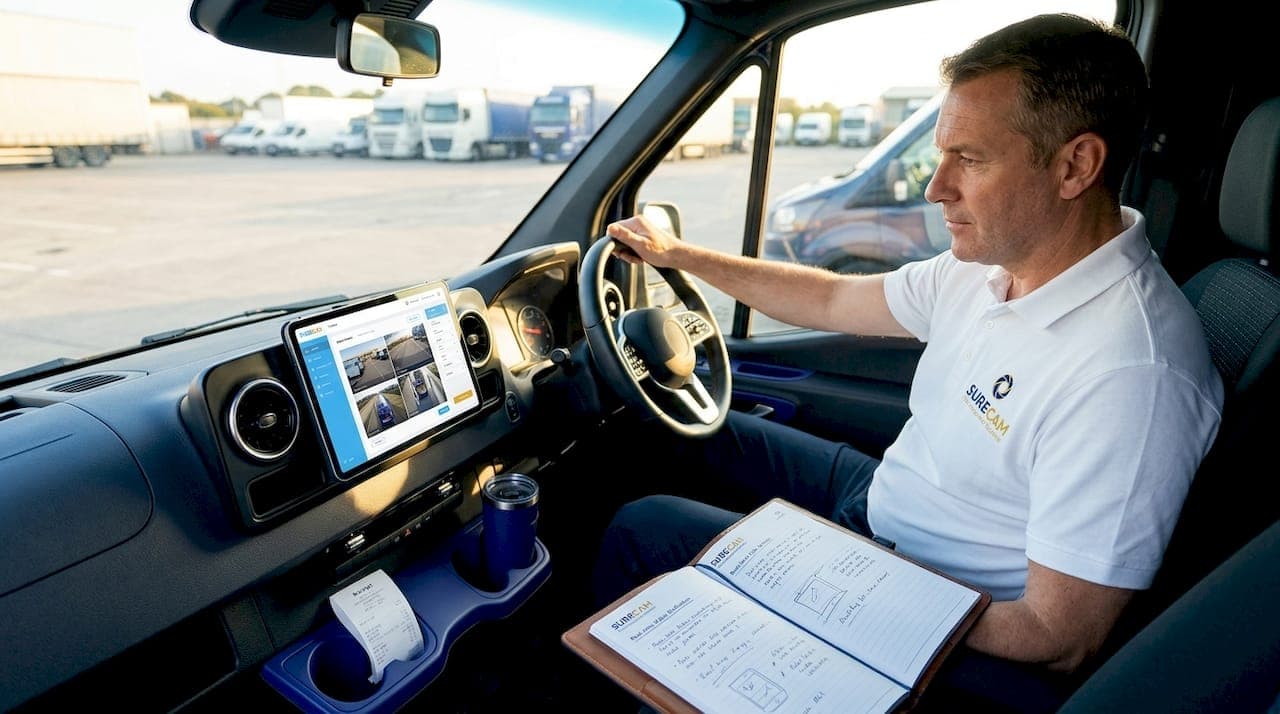
Commercial fleets are operating in a higher-stakes environment than ever before. Multicamera systems for fleets are no longer a premium upgrade — they are a frontline safety tool and, in many jurisdictions, a compliance requirement. 2026 marks a shift where driver monitoring systems have moved from optional to essential. Fleet managers who treat in-cab and road-facing cameras as separate, standalone tools are already behind. This guide covers how these systems work, how to choose one, how to deploy it legally, and how to actually use it to reduce incidents.
Key Takeaways
| Point | Details |
|---|---|
| Essential safety tools | Multicamera systems with AI driver monitoring are now essential for commercial fleet safety and compliance. |
| Dual-channel monitoring | Recording both road and cabin views enables detection of external hazards and internal driver behaviors. |
| Privacy compliance | Strong data governance and impact assessments protect fleets from legal risks and build trust. |
| Proactive safety | Real-time alerts and driver coaching reduce accidents and improve operational efficiency. |
| Vendor selection | Choosing the right system requires balancing features, pricing models, and integration with existing fleet management. |
Understanding multicamera systems: components and capabilities
To harness the full benefit of multicamera systems, it helps to understand exactly what these systems do and how their components work together.
A modern fleet camera system is not just a dashcam pointing at the road. It is a coordinated network of lenses, processors, and cloud infrastructure. Effective fleet dash cam solutions combine AI driver monitoring, dual-channel recording, ADAS collision avoidance, and cloud-connected fleet management into a single platform. Each component serves a distinct purpose, and together they create a complete picture of every trip.
Core components of a modern multicamera system:
- Road-facing camera (channel 1): Captures forward video, traffic events, road conditions, and external hazards. Used for incident documentation and ADAS analysis.
- Driver-facing camera (channel 2): Monitors the cabin and the driver. Used for DMS (Driver Monitoring System) detection of fatigue, distraction, and phone use.
- AI processing unit: Runs real-time behavioral analysis on both feeds simultaneously. Triggers in-cab audio alerts and flags events for review.
- ADAS module: Monitors following distance, lane position, speed limits, and pedestrian proximity. Alerts the driver before situations escalate.
- Cloud portal: Receives GPS data, event clips, and driver scorecard updates in near real time. Enables real-time driver monitoring for fleet managers and safety teams from any device.
The value of 360-degree fleet cameras and multi-channel configurations comes from the visibility gaps they close. A single forward camera misses in-cab behavior entirely. A driver-facing camera without road context cannot place an event accurately. Combined, they eliminate the blind spots that cost fleets money in disputes, claims, and avoidable accidents.
| Component | Function | Benefit |
|---|---|---|
| Dual-channel recording | Simultaneous road and cabin capture | Full incident context |
| AI DMS | Detects fatigue, phone use, distraction | Proactive in-cab alerts |
| ADAS | Lane, collision, speed monitoring | External hazard warnings |
| Cloud portal | Live GPS, event clips, scorecards | Remote fleet visibility |
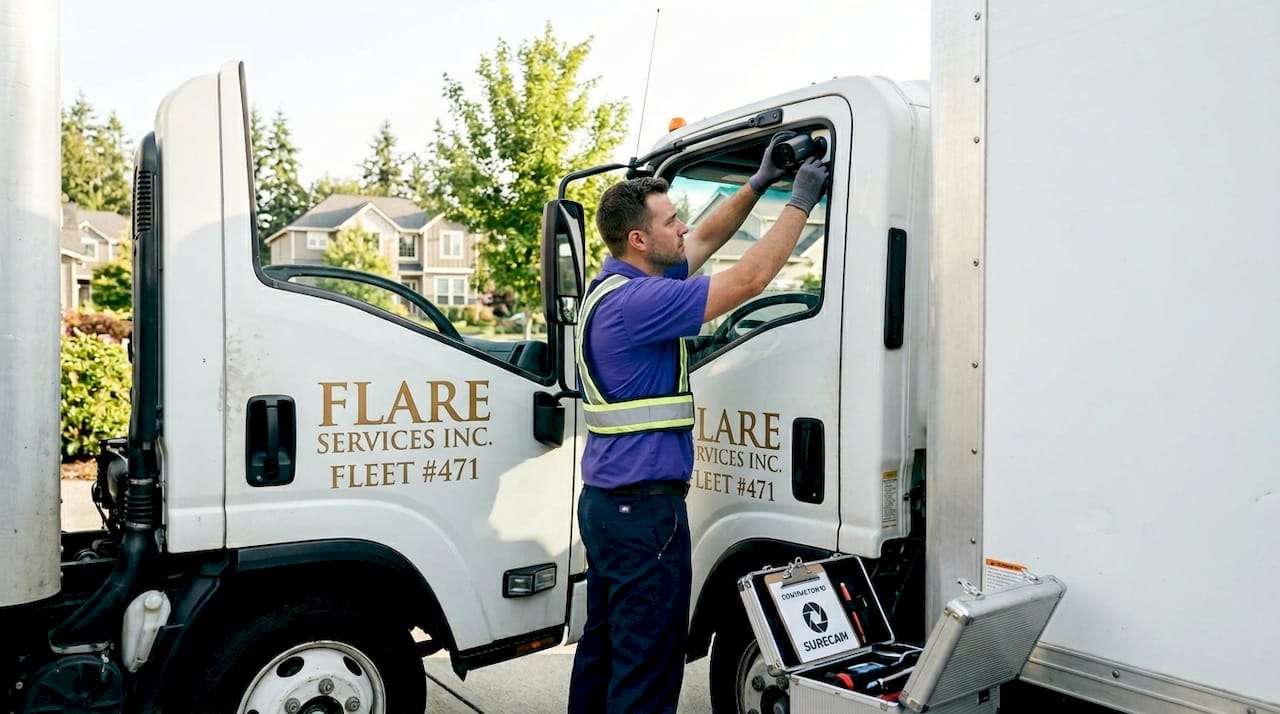
Pro Tip: When evaluating any system, confirm that both the road-facing and driver-facing feeds are stored independently and simultaneously. Some lower-cost units record only one channel at a time, which defeats the purpose of a dual setup.
The dashcam benefits for commercial fleets extend well beyond incident recording. When AI and cloud connectivity are layered in, the system shifts from passive recorder to active safety tool.
Comparing top multicamera system solutions and pricing models
With a clear grasp of core system functions, evaluating vendor options helps tailor your selection to fleet size, budget, and operational needs.
The market for advanced camera systems for vehicles has grown substantially, and the differences between vendor offerings are meaningful. Price alone does not tell the story. A lower hardware cost can come with limited AI behavior detection, no ADAS, or a subscription model that adds significant long-term expense.
| Vendor | Hardware cost | AI behaviors detected | ADAS suite | Subscription required |
|---|---|---|---|---|
| Vantrue | From ~$349/unit | 6 behaviors | Full | No |
| Samsara | Enterprise pricing | 4+ behaviors | Partial | Yes |
| Lytx | Managed service | 4 behaviors | Limited | Yes (managed analytics) |
Vendor comparisons for 2026 show that Vantrue offers no-subscription, high-resolution dual-channel recording with six AI behaviors and a full ADAS suite. Samsara targets large enterprises with a subscription platform, while Lytx provides a managed analytics service at a higher ongoing cost.
Key factors to weigh when comparing multi-camera solutions:
- AI behavior detection scope: More detected behaviors (drowsiness, phone use, seatbelt non-compliance, smoking, eating, yawning) means finer-grained safety data and fewer gaps.
- ADAS completeness: Full suites include lane departure, forward collision warning, tailgating alerts, and pedestrian detection. Partial suites may exclude one or more of these.
- Subscription vs. hardware cost: A $349 unit with no subscription can be more economical at scale than a $200 unit with a $30/month/vehicle platform fee over three years.
- Platform integration: Check whether the vendor portal integrates with your existing telematics or whether you need a separate system. Fleet dash cameras combined with telematics reduce reporting overhead considerably.
- Storage: Cloud-only systems depend on cellular connectivity. Edge storage (SD card or onboard memory) ensures footage is preserved even in dead zones.
Pro Tip: Request a full feature matrix from any vendor before signing. Ask specifically which ADAS alerts are included in the base subscription versus add-ons. Some vendors list "ADAS" as a feature but only activate a portion of it at the standard tier.
For fleets evaluating dual dash cams for fleets, the sweet spot is usually a system with at minimum four AI behaviors, forward collision and lane departure ADAS, and cloud access without per-event data charges.
Ensuring privacy and regulatory compliance in multicamera deployments
Beyond technical specs and cost, compliant governance is key to successful multicamera system deployment and sustainable operations.
Deploying vehicle surveillance systems without a privacy framework is not just a legal risk. It is an operational liability. Drivers who do not understand what is recorded, how long it is kept, or who can access it are more likely to resist adoption, file complaints, or trigger regulatory scrutiny.
"Enterprise-grade governance with clear data flows, access roles, and export procedures is critical to avoid fines and ensure regulatory defensibility."
Steps for privacy-compliant multicamera deployment:
- Define lawful purpose: Document why each camera is installed, what it captures, and the legal basis for doing so. Vague justifications do not hold up under audit.
- Conduct a DPIA (Data Protection Impact Assessment): Performing a DPIA before deployment is often requested by regulators as evidence of proactive risk mitigation. It maps data flows, identifies risks, and documents controls.
- Implement role-based access controls: Not every manager needs access to every driver's footage. Limit who can view, download, or export recordings based on defined roles.
- Set data retention policies: Define how long footage is stored, what triggers extended retention (incidents, disputes), and how automated deletion is enforced.
- Use edge processing where possible: On-device AI processing reduces the volume of raw footage transmitted to the cloud, supporting data minimization principles.
- Notify drivers formally: Written notice, signed acknowledgment, and clear policy documentation are non-negotiable. Some jurisdictions require posting notices in vehicles.
For a detailed breakdown of how to balance safety objectives with driver rights, the fleet dash cam privacy guide covers the practical considerations fleet managers need to address before going live.
Pro Tip: Build your privacy policy documentation before you order hardware. Retrofitting governance after deployment is far more disruptive and signals poor planning to auditors. Work with your legal counsel or a data protection officer to complete the DPIA as part of your procurement process.
The expert fleet safety management tips available through SureCam's resource library also address how safety managers can structure their programs to meet both operational and compliance goals simultaneously.
Maximizing fleet safety and efficiency with multicamera systems
Understanding compliance opens the door to using multicamera systems for measurable safety and efficiency gains.
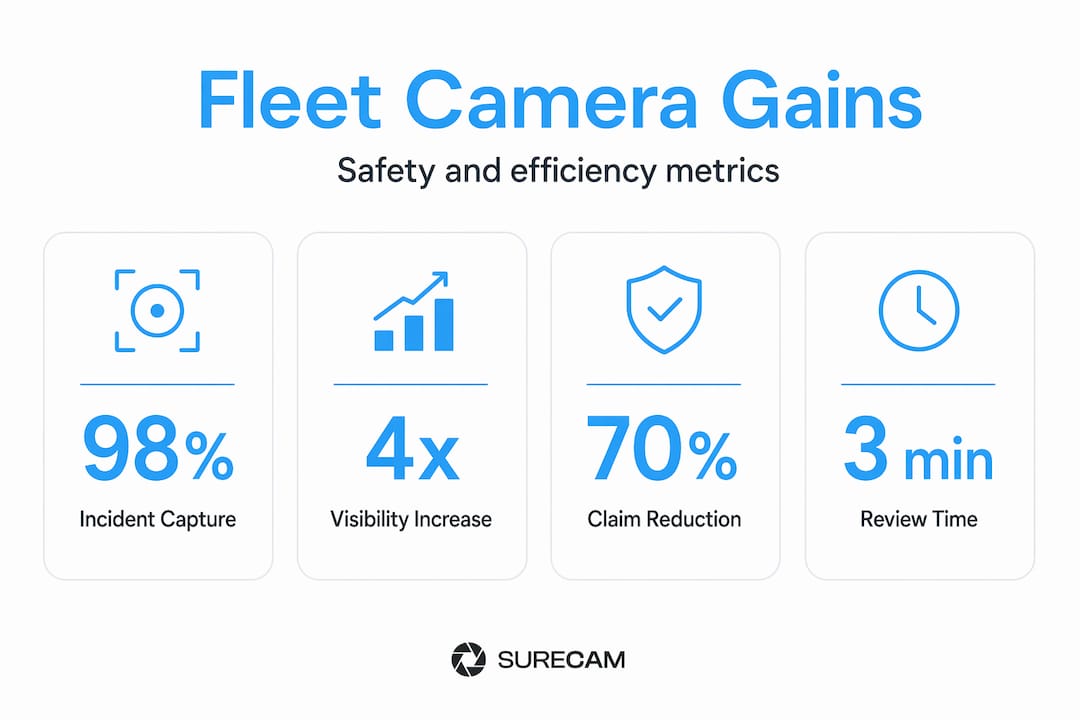
The operational payoff of the best multicamera setups for fleets comes from shifting the program from reactive to proactive. AI video systems enable fleets to move from recording incidents after they happen to preventing them before they escalate. That is a fundamental change in how fleet safety programs operate.
Where multicamera systems deliver measurable results:
- In-cab AI alerts: When the system detects drowsiness or distraction, it triggers an audio alert immediately. The driver corrects before a near-miss occurs. This is the single most direct form of accident prevention available.
- Driver scorecards: Cloud portals generate scores based on detected behaviors, speeding events, harsh braking, and ADAS triggers. Managers can identify high-risk drivers and prioritize coaching sessions.
- Incident video for claims: When an accident does occur, synchronized dual-channel video with GPS timestamps resolves fault disputes faster and with less legal exposure. Insurers increasingly require or reward this capability.
- Driver incentive programs: Linking driver safety incentive programs to video-based scorecard data gives recognition programs credibility. Drivers respond better to data they can see and verify.
- Coaching sessions: Short video clips of actual events replace abstract safety lectures. Showing a driver their own near-miss is more effective than any slideshow.
Pro Tip: Set a weekly review cadence for your top ten flagged drivers rather than trying to review all events. Focus coaching resources where the risk concentration is highest. Most fleets find that 20% of drivers generate 60–70% of safety events.
Fleet monitoring technology reaches its full value when the data feeds directly into driver development. Real-time driver monitoring does not mean watching every feed at once. It means configuring alerts so the right events surface to the right people automatically.
Why data governance is the hidden key to multicamera system success
Most conversations about multicamera security for vehicles focus on features: resolution, AI accuracy, ADAS coverage. Those things matter. But after working across commercial fleet environments, the programs that succeed long-term are not necessarily the ones with the most sophisticated hardware. They are the ones that have built a governance structure their drivers trust and their regulators can verify.
Many fleets invest in advanced camera systems for vehicles and then underinvest in the documentation, policies, and access controls that protect them when something goes wrong. A poorly governed system creates liability even when the footage would have exonerated the driver. If the data was accessed improperly, retained longer than policy allows, or shared without authorization, the incident outcome becomes secondary to the process violation.
In privacy compliance, the ability to demonstrate control is as important as the control itself. Regulators do not just want to know that you have a retention policy. They want to see it documented, enforced, and auditable. That means logs, timestamps, and a chain of accountability for every access event.
2026's regulatory direction is explicitly toward balancing driver monitoring performance with data security and driver privacy. Fleets that treat governance as an afterthought will face an increasingly difficult compliance environment.
The stronger position is to build privacy and safety as parallel goals. Transparent data practices build driver trust. Driver trust increases adoption and reduces pushback. Better adoption means more complete data. More complete data means better safety outcomes. The loop is self-reinforcing when governance is done right.
If you want a practical framework for how this works in practice, the fleet dash cam privacy article lays out the key considerations in plain terms.
Explore SureCam multicamera fleet solutions for enhanced safety
Fleet managers who are ready to move beyond single-camera setups will find that SureCam's multicamera fleet systems are built for exactly this environment.
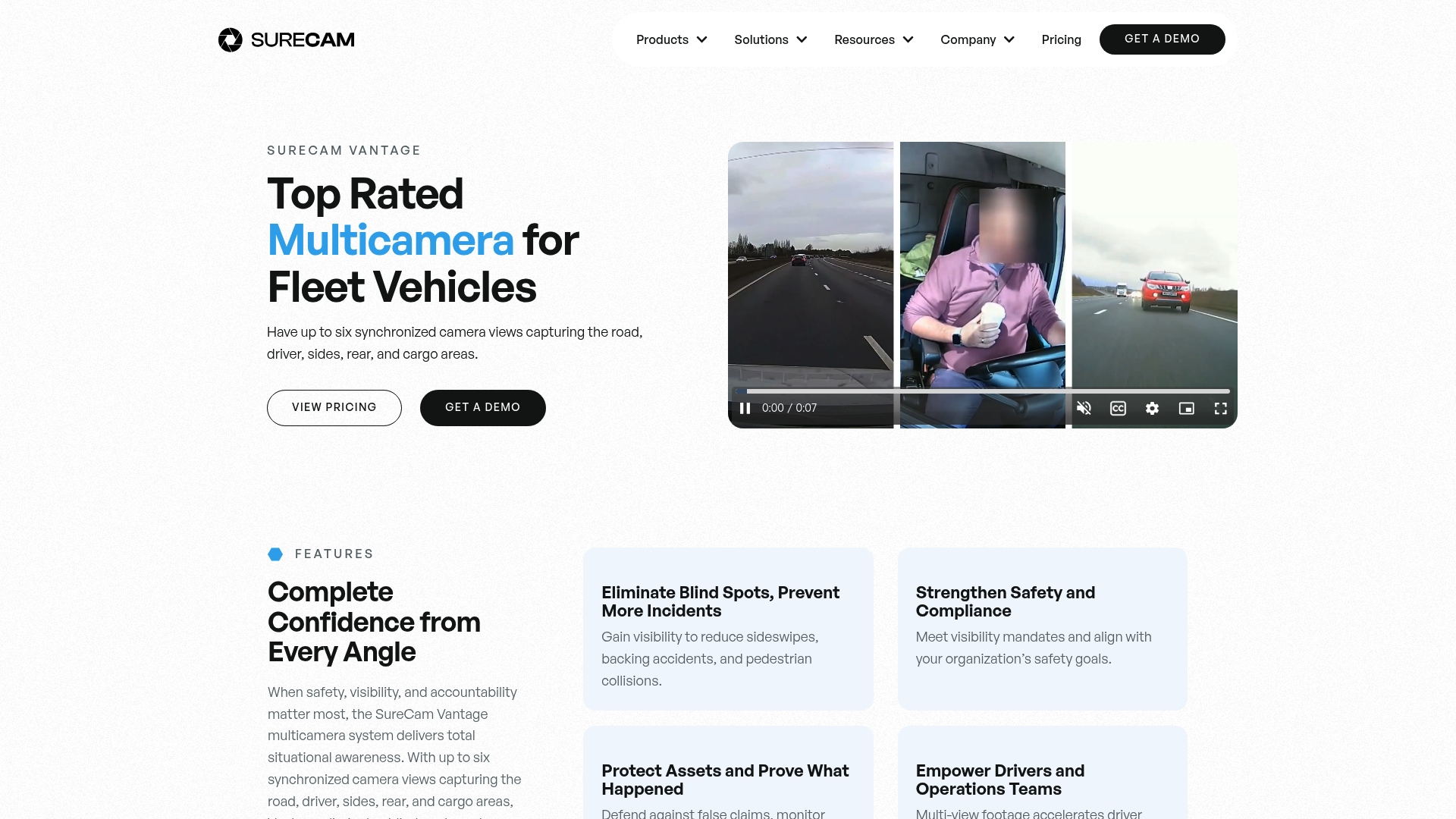
SureCam offers dual dash cams for your fleet with AI driver monitoring, ADAS functionality, and cloud connectivity built in. The platform supports live streaming, GPS tracking, event management, and driver scorecards, all accessible from a single portal. Flexible options range from hardware-focused configurations to full telematics subscriptions, depending on fleet size and operational needs. Privacy governance tools are integrated into the platform to simplify compliance documentation and access control. Explore the full range of fleet dash cameras for safety and efficiency or visit SureCam's fleet tracking solutions to see how the platform fits your operation.
Frequently asked questions
What are the main benefits of using multicamera systems in fleets?
Multicamera fleet systems monitor both road and cabin environments simultaneously, providing full incident context, supporting proactive driver coaching, and strengthening regulatory compliance. They also reduce claim disputes by delivering timestamped, GPS-linked dual-channel video evidence.
How do multicamera systems help with privacy compliance?
They enable precise control over what is recorded and who can access it, with features like role-based permissions, configurable retention periods, and automated deletion. Enterprise-grade governance tools, including data flow documentation and access logs, are critical for regulatory defensibility.
Can multicamera systems detect driver fatigue and distraction?
Yes. AI-powered DMS platforms detect drowsiness, phone use, seatbelt non-compliance, and distraction in real time, triggering in-cab audio alerts before behaviors escalate into incidents.
What factors should I consider when choosing a multicamera system for my fleet?
The best choice depends on fleet size, budget, the number of AI behaviors the system detects, the completeness of the ADAS suite, whether subscription costs apply, and how well the platform integrates with your existing telematics infrastructure.