

The role of camera types in fleet safety is far more nuanced than most fleets realize. AI-enabled dual-facing cameras reduce crashes 73% over 30 months and outperform forward-facing cameras by more than twice. That gap matters enormously when you are evaluating camera options, managing insurance costs, or trying to reduce incidents across a large fleet. This guide breaks down the main camera types, what the evidence says about their safety performance, and how to build a camera program that actually changes driver behavior, not just records what happened.
Key Takeaways
| Point | Details |
|---|---|
| Dual-facing cameras excel | AI-enabled dual-facing cameras significantly outperform front-facing ones in reducing fleet crashes and unsafe driving. |
| Compliance drives camera choice | Regulations like the UK DVS require specific camera setups to eliminate blind spots for legal operation. |
| Integration boosts safety | Combining multi-camera systems with telematics platforms enhances risk management, coaching, and operational efficiency. |
| Behavioral change is key | Safety gains depend heavily on driver coaching and transparent change management around camera data. |
| Choose software wisely | Fleet safety value relies as much on management platforms as camera hardware performance. |
Understanding camera types and their roles in fleet safety
Not all fleet cameras serve the same function. The type you install directly shapes what safety data you collect, what behaviors you can influence, and how quickly you see measurable results. Three main types are in widespread use today.
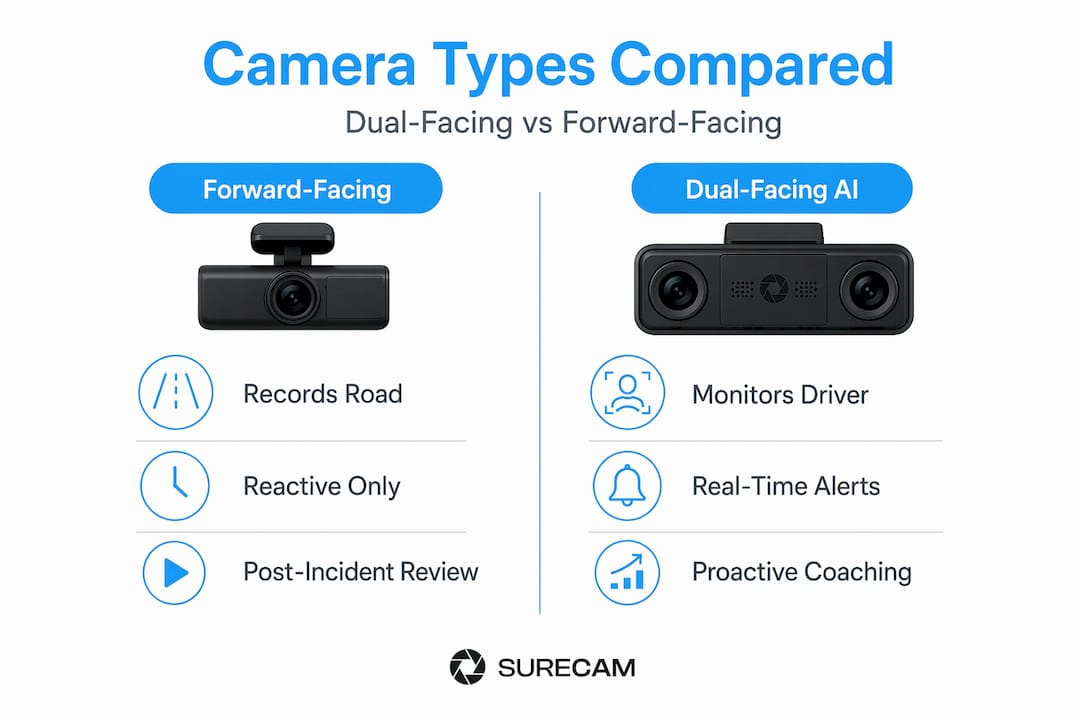
Forward-facing cameras are mounted on the windshield and point outward toward the road. They capture external events such as near-misses, collisions, and traffic conditions. They are useful for incident review and insurance defense. However, single-channel front cameras cannot verify driver behavior, only road events. If a crash happens because a driver was distracted, a forward-facing camera records the crash but not the cause.
Driver-facing cameras point inward at the cabin. They monitor driver attention, fatigue, mobile phone use, and seatbelt compliance. This view fills the critical blind spot that forward-facing cameras leave entirely uncovered.
Dual-facing cameras combine both views in a single, synchronized system. You get road footage and driver footage at the same time, tied to the same timestamp. This is the configuration that delivers the strongest safety outcomes.
Here is a quick summary of what each type captures:
- Forward-facing only: Road conditions, external hazards, third-party incidents
- Driver-facing only: Cabin behavior, fatigue indicators, phone use, seatbelt status
- Dual-facing: Synchronized road and driver data, real-time AI alerts, coaching triggers
Explore dual dash cams or compare them against front-facing dash cams to understand the practical differences in data capture before making a purchasing decision.
With the types of cameras defined, let's examine their practical impact on fleet safety outcomes.
Comparing safety performance: Dual-facing AI cameras versus front-facing only
The performance gap between these camera types is not marginal. It is significant enough to change how you should think about camera investment entirely.
Research shows that dual-facing cameras with AI coaching reduce crashes twice as effectively as forward-facing cameras alone, with a 49% decrease in harsh driving events and an 85% drop in mobile phone use within just six months of deployment. These are not incremental gains. They reflect a fundamental difference in how the two systems interact with driver behavior.
Forward-facing cameras are primarily reactive. They document incidents after the fact. A safety manager can review footage, identify what happened, and discuss it during a coaching session days later. That delayed loop has value, but it does not interrupt risky behavior as it happens.
Dual-facing AI cameras operate proactively. When the system detects distraction, fatigue, or phone use, it delivers an in-cab alert immediately. The driver receives feedback in real time, before a near-miss or collision occurs. That shift from reactive to proactive is what drives the superior outcomes.
| Feature | Forward-facing only | Dual-facing AI |
|---|---|---|
| Road event capture | Yes | Yes |
| Driver behavior monitoring | No | Yes |
| Real-time in-cab alerts | No | Yes |
| AI event detection | Limited | Full |
| Crash reduction effectiveness | Baseline | 2x more effective |
| Mobile phone use reduction | Minimal | Up to 85% in 6 months |
| Coaching data quality | Partial | Full context |
Safety metrics also compound over time. Fleets that deploy dual-facing AI systems see early improvements in the first few months, and those gains build as drivers internalize the feedback. The 73% crash reduction figure referenced above reflects a 30-month period, meaning the longer a fleet uses the system correctly, the stronger the results become.
Pro Tip: When evaluating camera systems, ask vendors specifically about their in-cab alert capabilities. Real-time audio or visual alerts delivered inside the vehicle are what separate proactive safety tools from passive recorders.
Understanding the benefits of AI dash cams will help you frame the business case internally. You can also review how these systems work specifically for preventing distracted driving to see the mechanism behind the data.
Having seen the superior performance of dual-facing cameras, consider how regulatory and compliance demands shape camera selection.
Camera requirements for compliance: The case of Direct Vision Standard (DVS) and blind spot elimination
For fleets operating heavy goods vehicles in London, camera type selection is not just a safety decision. It is a legal requirement. The UK's Direct Vision Standard provides a clear example of how regulatory frameworks increasingly dictate specific camera configurations.
DVS compliance mandates camera monitoring systems that fully eliminate near-side blind spots for vehicles over 12 tonnes, requiring Class V and VI mirrors or cameras complying with UNECE R46 standards. This is not a general recommendation. It is enforceable. Fleets operating without compliant systems face permits being denied or revoked.
The regulation exists for a clear reason. DVS enforcement contributed to a 51% reduction in vulnerable road user deaths or serious injuries and a 37% reduction in fatalities since the 2017 to 2019 baseline. Camera systems designed for compliance are directly saving lives outside your vehicles, not just protecting your drivers.
Here is how to approach DVS compliance camera selection:
- Identify the blind spot zones on each vehicle type in your fleet. Near-side blind spots on HGVs are the primary focus of DVS requirements.
- Specify cameras rated to UNECE R46 standards. Not every camera on the market meets this specification. Confirm with your vendor before purchasing.
- Verify full coverage without dead zones. The standard requires complete elimination of the near-side blind spot, not partial coverage.
- Document your installation and configuration. Compliance evidence needs to be accessible if your permits are audited.
- Review your permit requirements annually. DVS standards have evolved since 2019 and continue to be updated.
"Camera monitoring systems that are intended to replace mirrors must comply with UNECE R46 to be considered for DVS compliance. Partial solutions will not satisfy the standard."
Pro Tip: Treat DVS compliance as the minimum threshold, not the goal. A camera system that satisfies DVS while also supporting driver behavior monitoring delivers both regulatory adherence and operational safety benefits simultaneously.
Fleet managers evaluating compliance-driven camera selection should review fleet camera compliance solutions and consider how telematics and camera integration can address both requirements within a single platform.
With compliance considerations in mind, let's examine how fleets can integrate multiple camera types for comprehensive safety and operational benefits.
Integrating multi-camera systems and telematics for holistic fleet safety
Single-camera setups, even good ones, have coverage limits. Multi-camera systems combined with a telematics platform address those limits while creating a unified view of safety performance across the entire fleet.
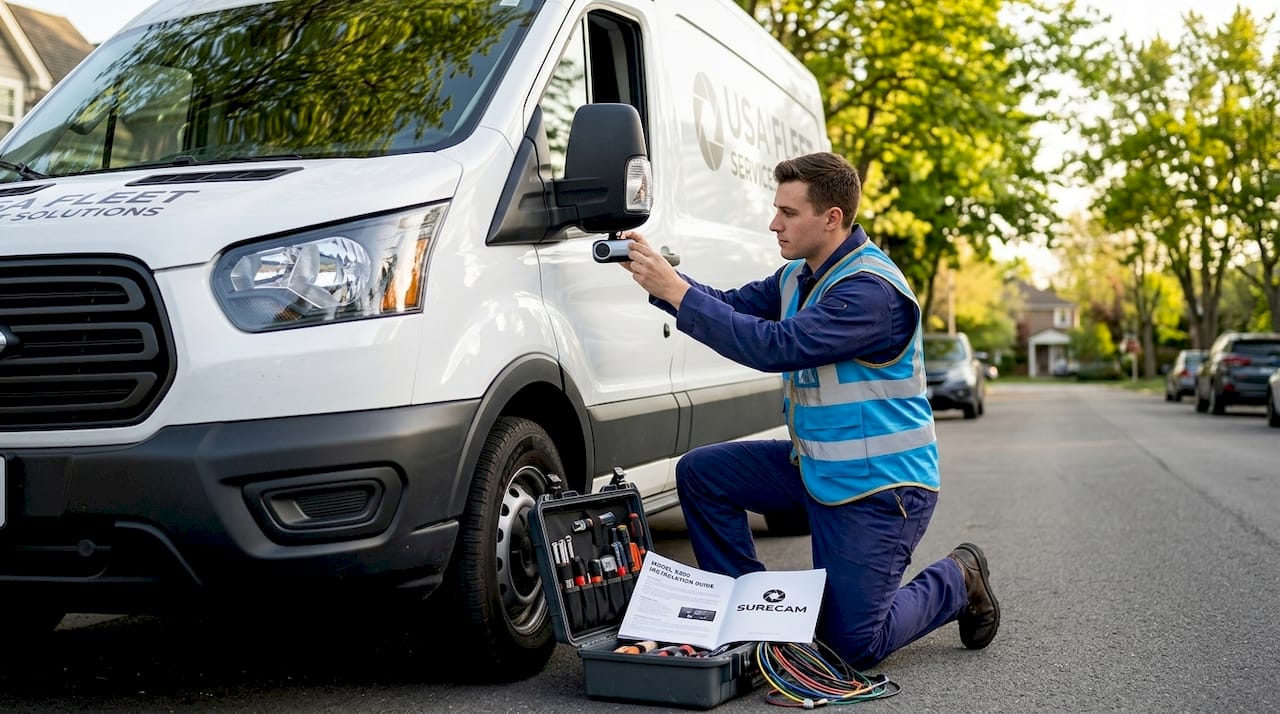
The importance of video monitoring in fleets becomes fully apparent when cameras are connected to telematics data. Speed, location, braking force, acceleration, and video footage all feed into the same platform. A safety manager can see not just that a harsh braking event occurred, but where it happened, what the driver was doing, and whether it is part of a recurring pattern on a specific route.
Tarmac's integration of multi-camera and telematics reduced collisions by almost 30%, lowered the proportion of high-risk drivers from 40% to 6.5%, and cut collision repair costs by 30%. Those results came from using connected data to identify specific risk patterns and deliver targeted training, not from cameras alone.
| Metric | Before integration | After integration |
|---|---|---|
| Collision rate | Baseline | Down ~30% |
| High-risk drivers | 40% of fleet | 6.5% of fleet |
| Collision repair costs | Baseline | Down ~30% |
The practical benefits of multi-camera telematics integration include:
- Risk scoring by driver: Managers can rank drivers by risk level and prioritize coaching resources where they are needed most.
- Incident reconstruction: Multiple camera angles combined with GPS and sensor data provide complete event context for insurance and legal purposes.
- Route-level analysis: Telematics reveals whether certain routes or times of day consistently produce higher-risk events.
- Automated alerts: High-severity events trigger immediate notifications so managers respond faster.
Pro Tip: Before deploying a multi-camera system, map out which safety questions you most need answered. Camera placement and system configuration should follow your risk priorities, not a generic default layout.
Reviewing how fleet cameras support safety and efficiency together helps clarify the operational return alongside the safety case. Fleets that also need to address fleet vehicle maintenance as part of their operational program can benefit from connecting maintenance schedules with incident data to spot vehicle-condition-related risk patterns. For a broader view of the telematics layer, business fleet telematics outlines how the data infrastructure supports both safety and operational reporting.
These practical benefits link closely to how fleets can successfully implement camera technologies for sustained safety gains.
Practical tips for selecting and deploying camera systems in fleets
Selecting the right camera type is only half the work. Deployment quality and change management determine whether safety outcomes actually improve. Here is what fleet managers should prioritize.
- Choose cameras with integrated AI driver monitoring and in-cab alerts. Hardware without real-time alerting is passive. You need the system to interrupt risky behavior in the moment, not just record it.
- Evaluate the fleet management platform, not just the camera. The best cameras for fleet management are ones connected to platforms that surface actionable insights, generate driver scorecards, and flag patterns over time. Video storage alone does not change driver behavior.
- Communicate the purpose to drivers before installation. Effective safety improvements with driver-facing cameras require change management, including coaching and avoiding "gotcha" framing so drivers accept the technology as protective and training-focused.
- Establish a coaching workflow from day one. Cameras generate data. Safety managers turn that data into coaching conversations. Build the time and process for regular reviews into your deployment plan before cameras go live.
- Set clear data use policies. Define in writing how footage will and will not be used. This reduces driver anxiety and builds the trust that makes behavioral change stick.
Pro Tip: Pilot your deployment with a smaller group of drivers who are open to the technology. Use their results and feedback to refine your coaching workflow before rolling out fleet-wide.
Understanding your options for driver safety incentive programs can strengthen acceptance and sustain behavior improvements after the initial rollout period. For practical guidance tailored to your role, expert fleet safety resources offer frameworks and case examples that apply directly to implementation planning.
Understanding these best practices prepares fleet managers to weigh options effectively and realize camera safety benefits fully.
Why behavioral integration matters more than just camera hardware
There is a persistent assumption in fleet safety circles that upgrading camera hardware is the primary lever for improving safety outcomes. The evidence does not support that view fully. Hardware matters, but it is only part of the equation.
Effectiveness depends on dual-facing cameras plus in-cab alerts and coaching delivered as part of a broader behavior change workflow, not just passive recording. A dual-facing AI camera installed on a vehicle where no one reviews the data, no coaching conversations happen, and no driver ever receives feedback produces far weaker results than the headline statistics suggest.
Fleets that treat camera deployment as a one-time technical project tend to see early gains plateau. Those that treat it as an ongoing behavioral management program see results continue to compound. The difference is not the hardware. It is the workflow around the hardware.
Transparency is also underrated. Drivers who understand what the system monitors, how the data is used, and that footage will support them in disputes rather than only be used against them are far more likely to engage positively with coaching. Resistance to driver-facing cameras is almost always a trust problem, not a technology problem.
The most effective fleet safety managers position cameras as tools that protect drivers, not tools that watch them. That framing, consistently applied, is what converts camera data into sustained behavior change. Behavioral safety management resources reinforce this approach and provide practical frameworks for building the culture around the technology.
Enhance your fleet safety with SureCam's advanced camera solutions
SureCam's AI-enabled dual-facing cameras are built specifically for commercial vehicle fleets that need more than passive recording. Every camera combines road-facing and driver-facing views with real-time AI detection, in-cab alerts, and cloud-connected video storage.
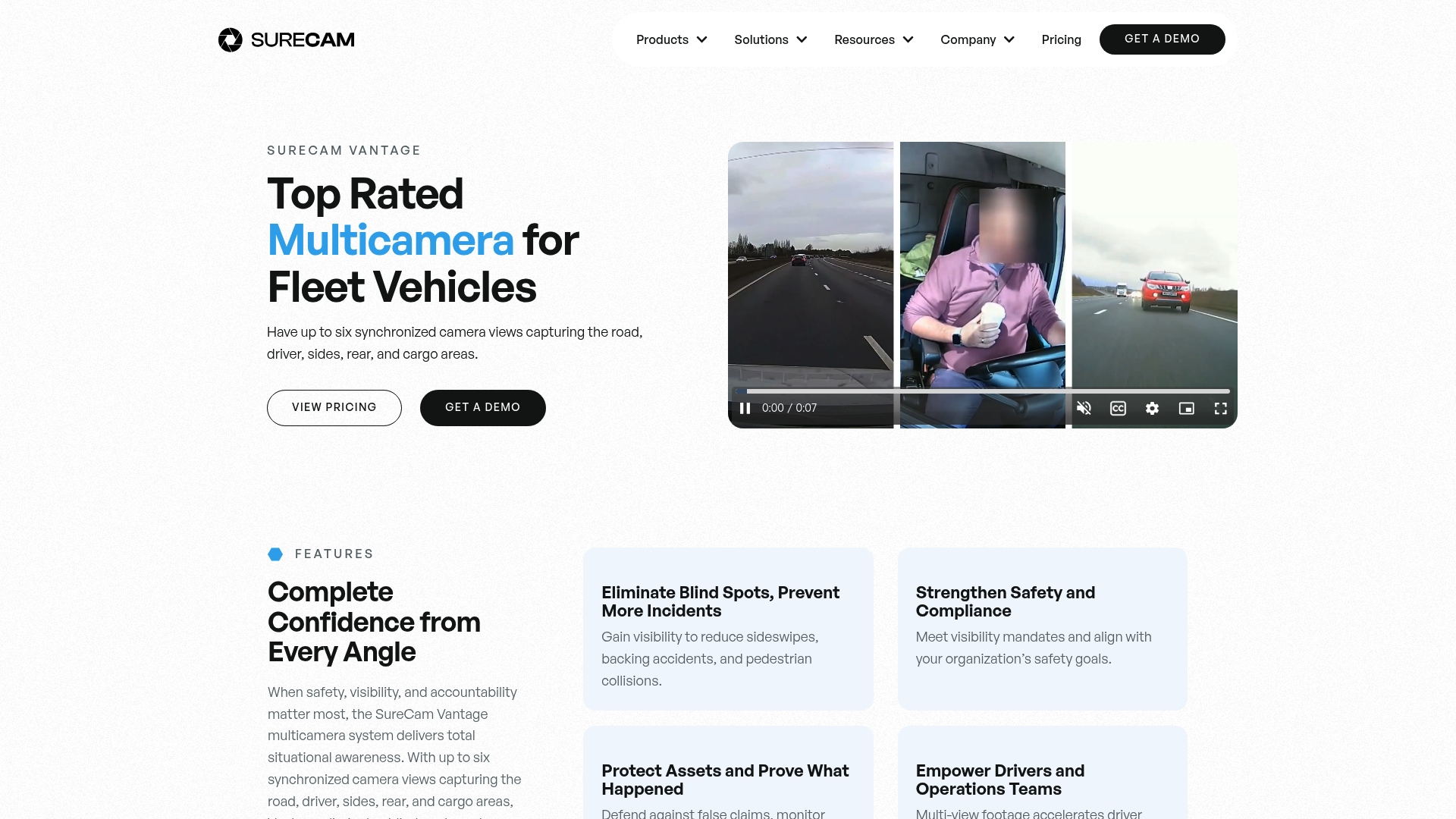
The integrated telematics platform gives safety managers driver risk scores, incident timelines, and coaching triggers in a single dashboard. Whether your priority is reducing harsh events, building a DVS-compliant configuration, or deploying multi-camera setups across mixed vehicle types, SureCam's product range supports each need directly. Explore SureCam dual dash cams to see the dual-facing options, review SureCam telematics solutions for platform capabilities, or visit SureCam fleet tracking to see the full product range.
Frequently asked questions
What are the main benefits of dual-facing cameras for fleet safety?
Dual-facing cameras monitor both the road and the driver simultaneously, enabling real-time AI alerts and structured coaching that reduce crashes and risky behaviors far more than front-facing cameras alone. AI-enabled dual-facing cameras are twice as effective at improving fleet safety compared to forward-facing-only setups.
How do cameras help fleets comply with the UK Direct Vision Standard (DVS)?
DVS requires that camera monitoring systems eliminate blind spots on the near-side of vehicles over 12 tonnes, making compliant camera installation a legal requirement for HGV operators in London rather than an optional upgrade.
What factors improve driver acceptance of in-cab driver-facing cameras?
Transparent change management practices including regular coaching, non-punitive use of footage, and framing cameras as safety tools increase driver buy-in. Accident reduction benefits require deliberate coaching so drivers view cameras as protective rather than as surveillance.
Can multi-camera systems integrated with telematics improve fleet safety beyond just recording incidents?
Yes. Integrated systems generate driver risk scores, identify route-level patterns, and support targeted training programs that produce measurable reductions in both collisions and costs. Tarmac reduced collisions by 30% and improved driver risk scoring through exactly this kind of integrated multi-camera and telematics approach.