
Choosing the right dash cam for a commercial fleet is rarely straightforward. With so many types of dash cams for fleets now available, ranging from basic front-facing units to AI-powered multi-channel systems, the selection process can quickly become overwhelming. The wrong choice costs money, creates compliance gaps, and leaves your drivers without adequate protection. This guide breaks down every major category, walks through the key selection criteria, and gives you a clear comparison so you can match the right system to your fleet's specific needs.
Key takeaways
| Point | Details |
|---|---|
| Know your dash cam types | Front-facing, dual-facing, multi-channel, and AI-enabled cameras each serve distinct fleet needs. |
| Storage strategy matters | A hybrid local and cloud model balances cost, retrieval speed, and legal compliance. |
| Legal compliance is non-negotiable | Audio recording and continuous in-cab video trigger state and federal privacy obligations. |
| AI adds real operational value | AI-enabled systems provide driver behavior scores that support coaching and reduce incidents. |
| Match type to fleet size | Enterprise telematics platforms suit 50-plus vehicles; standalone units work for smaller fleets. |
Key criteria for selecting fleet dash cams
Before comparing specific types, you need a clear evaluation framework. The right dash cam for a 12-vehicle HVAC company looks very different from the right solution for a logistics fleet running 200 trucks across multiple states.
Video quality and camera angles are the starting point. Minimum 1080p resolution is now standard for capturing readable license plates and road detail. Consider whether you need wide-angle lenses to cover blind spots or narrow lenses for long-distance clarity on highways.
Storage options deserve more thought than most buyers give them. The three models are local storage (SD card or onboard), cloud storage, and hybrid. Hybrid storage is widely regarded as the most practical approach because it keeps recent footage locally for fast access while uploading critical clips to the cloud. As one storage analysis puts it, more storage is not inherently better. Tiered retention policies prevent overpaying while keeping evidence available when you need it.
Connectivity features determine how quickly you can retrieve footage. Live streaming, Wi-Fi sync, and 4G LTE upload capabilities vary significantly by system. Real-time access is valuable for incident response and remote coaching.
Legal and privacy compliance is where many fleet managers get caught off guard. Audio recording laws in states like California, Illinois, and New York require all-party consent, and employers must notify workers before implementing electronic monitoring. Non-compliance carries civil and criminal risk.
Integration with telematics determines how much operational intelligence you actually get. A dash cam that feeds into fleet telematics gives you GPS tracking, driver behavior data, and incident correlation in one platform rather than siloed video files.
Cost models split into two categories. Enterprise subscription platforms bundle hardware, cloud storage, and software for a recurring fee. Standalone hardware involves a one-time purchase with optional cloud add-ons. Enterprise platforms suit 50-plus vehicle fleets while standalone hardware often works best for fleets of one to ten vehicles.
Pro Tip: Before you evaluate any specific camera, write down your three most pressing needs: incident evidence, driver coaching, or compliance documentation. That priority list will eliminate half the options immediately.
Common types of fleet dash cam systems explained
Understanding the role of dash cams in fleet safety starts with knowing what each camera type actually does.
1. Front-facing single cameras
The simplest and most affordable type. A single camera mounted on the windshield records the road ahead. These units are well suited for fleets where the primary concern is documenting road incidents and protecting against fraudulent claims. They provide solid evidence in rear-end collisions and traffic disputes. The limitation is obvious: you have no visibility into the cabin or the vehicle's sides and rear.
2. Dual-facing cameras
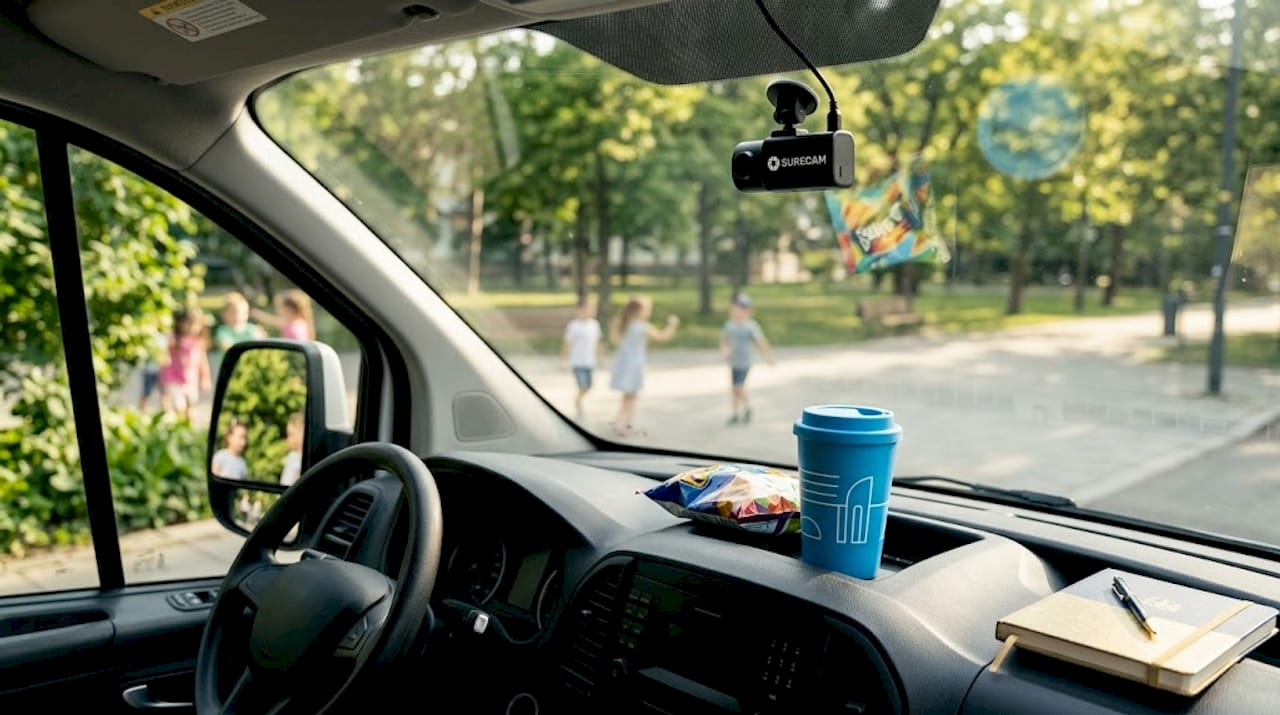
Dual-facing dash cams add an inward-facing lens that records the driver simultaneously with the road. This is the most popular upgrade from single cameras because it captures distracted driving, phone use, and fatigue events that a front-only unit cannot detect. For fleets focused on driver coaching and safety culture, dual cameras provide the evidence base to support those conversations. Privacy considerations apply: drivers should be notified, and in-cabin recording policies should be documented.
3. Multi-channel camera systems
Multi-channel systems use three to six cameras covering the front, rear, sides, and interior of a vehicle. These are standard for large commercial trucks, transit buses, and vehicles carrying passengers or high-value cargo. The tradeoff is cost and data volume. Each additional camera multiplies storage requirements. A four-camera truck generates substantially more footage per shift than a single front-facing unit. These systems often require enterprise telematics platforms to manage effectively.
4. AI-enabled dash cams
AI dash cams for fleets go beyond recording. They analyze footage in real time to detect specific driver behaviors: phone use, seatbelt violations, drowsiness, harsh braking, and lane departure. AI tools generate driver behavior scores that feed directly into coaching programs and, in some cases, disciplinary processes. Some systems incorporate facial recognition and attentiveness monitoring, which require additional consent and compliance steps. The ROI case for AI cameras is strong when you are managing more than 20 drivers, because the coaching data scales in ways that manual review never could.
5. GPS-integrated dash cams
The best GPS dash cams for fleets combine video with location data so every clip is tied to a specific route, speed, and map position. This matters enormously in incident reconstruction and insurance disputes. A clip showing a collision means one thing. A clip showing the collision at a specific intersection, with the vehicle traveling at a documented speed, means something much more definitive. GPS integration also supports geofencing and route compliance monitoring.
6. Standalone hardware units
Standalone units are purchased outright and typically store footage locally on an SD card or onboard drive. Data sovereignty is simpler: your footage stays on your hardware. Local systems simplify the privacy posture because no third-party vendor is processing your video data in the cloud. The trade-off is manual retrieval, limited remote access, and no automatic incident flagging unless you add software.
7. Enterprise telematics platforms
These are not just cameras. They are connected ecosystems that combine multi-channel video, GPS tracking, AI analysis, cloud storage, and fleet management reporting in one subscription. Subscription platforms route video through vendor clouds, which creates data sovereignty considerations that fleet operators must actively manage. For fleets over 50 vehicles, the operational efficiency of a unified platform typically justifies the ongoing subscription cost.
Comparing the main dash cam types
The table below gives you a side-by-side view of the primary categories to support your decision-making.
| Camera type | Best fleet size | Key strength | Key limitation | Cost model |
|---|---|---|---|---|
| Single front-facing | 1 to 10 vehicles | Low cost, simple evidence | No driver visibility | One-time hardware |
| Dual-facing | 5 to 50 vehicles | Road and driver coverage | Privacy compliance needed | Hardware plus optional cloud |
| Multi-channel | 20-plus vehicles | Full vehicle coverage | High data volume, complex setup | Enterprise subscription |
| AI-enabled | 20-plus vehicles | Behavioral analysis, coaching | Consent requirements, higher cost | Subscription |
| GPS-integrated | Any size | Location-linked evidence | Requires telematics integration | Varies |
| Standalone hardware | 1 to 10 vehicles | Data control, no recurring fee | Manual retrieval, no AI | One-time hardware |
| Enterprise telematics | 50-plus vehicles | Unified fleet intelligence | Vendor data dependency | Subscription |
Subscription platforms offer convenience and scalability. Standalone hardware gives you control. The right answer depends on how many vehicles you manage and how much operational oversight your safety program actually requires.
When it comes to storage, tiered retention policies are the standard that experienced fleet managers use: hot storage for immediate access, warm storage for recent operational data, and cold archival for compliance documentation. This approach prevents paying for premium cloud capacity on footage you rarely access.
Matching dash cam types to your fleet profile
With the types mapped out, the remaining question is fit. Here is how to align camera choice with your actual situation.
Small fleets under 10 vehicles are usually best served by GPS-integrated dual-facing cameras on a standalone or light subscription model. You get road and driver coverage, location data for incident reconstruction, and a manageable cost structure. Standalone units keep data under your direct control without needing a dedicated IT function to manage vendor compliance.
Mid-size fleets of 10 to 50 vehicles benefit from moving toward AI-enabled dual or multi-channel systems. The smart dash cams for fleet safety in this category generate behavior data that justifies the upgrade cost through reduced incidents and lower insurance premiums. At this scale, manual video review is not realistic, so automated flagging becomes operationally necessary.
Large fleets of 50 or more vehicles should evaluate enterprise telematics platforms. The per-vehicle economics of a subscription improve at scale, and the unified reporting layer is the only way to manage safety performance across dozens of drivers without a disproportionate administrative overhead.
Regulated industries such as transportation, utilities, and construction often face specific documentation requirements. Multi-channel systems with cloud storage and audit-ready reporting directly address those needs. Compliance with in-cab surveillance privacy obligations requires incident-triggered recording policies and restricted access controls regardless of fleet size.
Pro Tip: If your fleet operates across multiple states or provinces, audit the audio recording laws for each jurisdiction before finalizing your camera configuration. Disabling audio by default is the safest starting point.
A few additional factors worth considering:
- Driver notification policies should be documented before deployment, not after.
- Cloud storage agreements should specify data retention periods and deletion procedures.
- AI system outputs (behavior scores) used in disciplinary actions require clear policies and, in some jurisdictions, disclosure to employees.
- Dash cam video management practices matter as much as the hardware itself.
My honest take on selecting fleet dash cams
I've reviewed a lot of fleet camera deployments, and the pattern I see most often is managers defaulting to more storage instead of smarter storage. They buy the biggest SD card or the most expensive cloud tier and then never build a retention policy around it. That means they're paying to store footage they'll never watch, while the clips that actually matter get buried.
The second mistake I see constantly is treating legal compliance as an afterthought. Organizations often underestimate legal risks of dash cams even when the safety benefits are obvious. You cannot add audio recording to a California or Illinois fleet without all-party consent and still call it a minor operational detail. The exposure is real.
My actual recommendation for most mid-size fleets in 2026: start with AI-enabled dual-facing cameras on a light subscription platform, disable audio by default, and build a proper tiered retention policy before you roll out a single unit. The AI behavioral data will pay for itself faster than any hardware upgrade. What I've found is that the fleets with the best safety records are not the ones with the most cameras. They're the ones with clear policies, driver buy-in, and a system that actually gets reviewed.
Watch for tighter regulatory clarity on facial recognition in fleet AI systems. Several states are moving in that direction. The fleets that get ahead of it now will have far less to restructure later.
— Rob
See how Surecam fits your fleet
Surecam builds GPS-connected dash cam systems specifically for commercial fleets, with options spanning front-facing, dual-facing cameras, and full multi-channel setups. Every system integrates real-time live streaming, cloud storage, and AI-driven safety insights into a single platform designed for fleet managers who need more than just recorded footage.
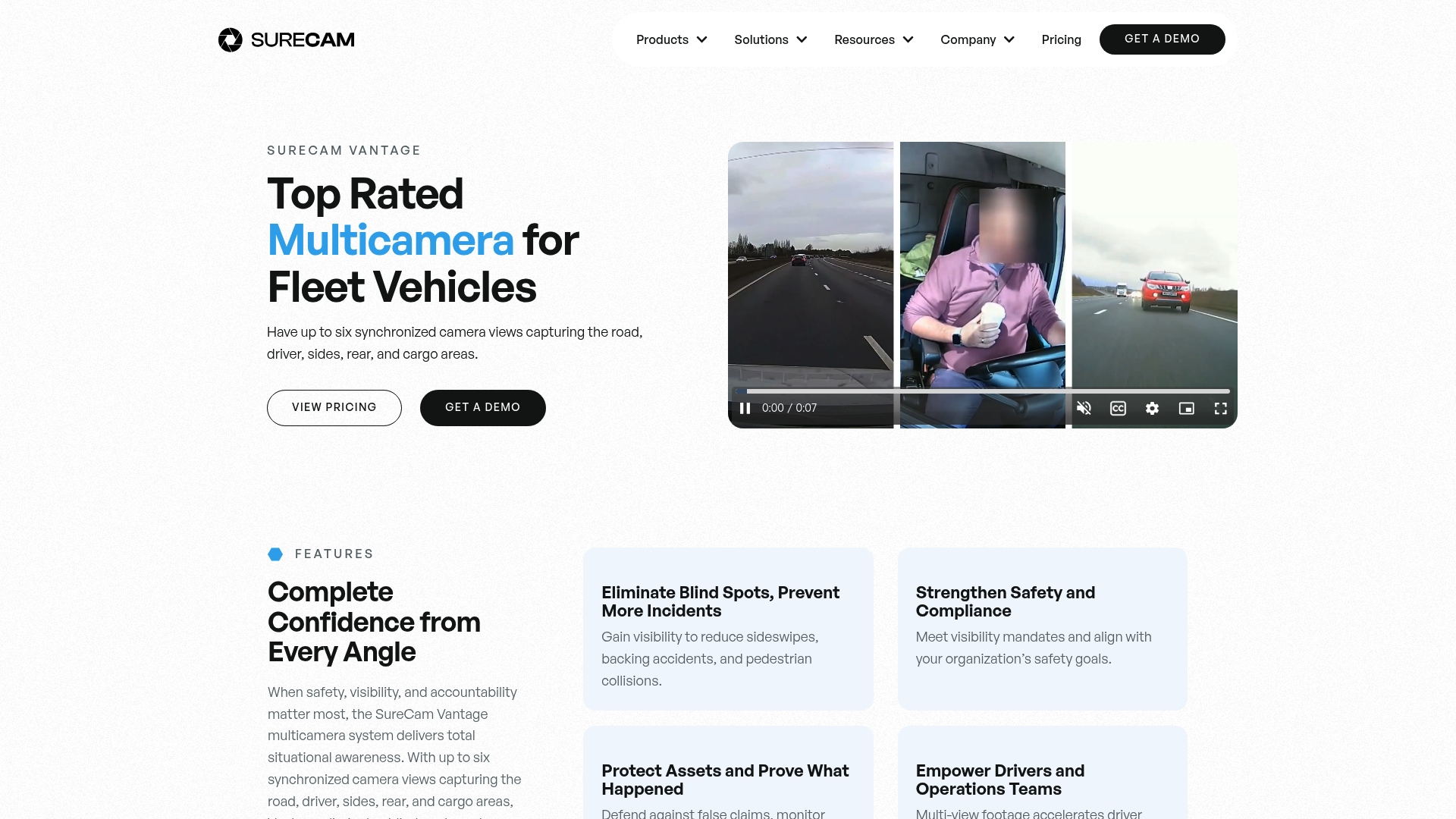
Whether you manage 5 vehicles or 500, Surecam's fleet camera solutions are built to scale with your safety program. Explore the full range of hardware and subscription options, or check out the case studies to see how fleets in construction, utilities, and field services are using Surecam to reduce claims and improve driver performance. Fleet camera systems for business owners are a good starting point if you want a clear overview of how the platform fits your operation.
FAQ
What are the main types of dash cams for fleets?
The main types are single front-facing cameras, dual-facing cameras, multi-channel systems, AI-enabled cameras, GPS-integrated units, standalone hardware, and enterprise telematics platforms. Each type serves different fleet sizes and safety priorities.
Why use dash cams in fleets at all?
Dash cam footage reduces insurance claims, clarifies fault in disputes, supports driver coaching, and provides legal evidence when incidents occur. AI-enabled systems add behavioral scoring that makes safety programs more data-driven.
How do AI dash cams for fleets differ from standard cameras?
AI dash cams analyze footage in real time to detect specific behaviors like phone use, drowsiness, and harsh braking, then generate driver behavior scores for coaching. Standard cameras record footage without automated behavioral analysis.
What is the best storage model for fleet dash cams?
A hybrid storage model is the most practical for most fleets, keeping recent footage locally for fast access while uploading critical clips to the cloud. Tiered retention policies based on fleet size and compliance needs control costs effectively.
Do fleet dash cams have legal compliance requirements?
Yes. Audio recording requires all-party consent in many U.S. states including California, Illinois, and New York. Employers must also provide notice before electronic monitoring, and in-cab video policies should limit recording to what is necessary and proportionate.