

Fleet managers and safety compliance officers face growing pressure to reduce accidents, control costs, and satisfy regulators, all at the same time. Vehicle monitoring technology addresses each of these demands by converting raw operational data into clear, actionable intelligence. From near-real-time GPS positioning to AI-based driver coaching and automated compliance records, modern systems give fleets a measurable edge. This article breaks down the key advantages, examines real limitations, and offers practical guidance on building a monitoring program that actually delivers results.
Table of Contents
- Near-real-time data unlocks proactive fleet safety
- Automated compliance and driver behavior monitoring
- Operational efficiency: Fuel savings and reduced idling
- Coaching, escalation, and measurable safety improvement
- Edge cases, privacy, and data limitations
- Quick comparison: Vehicle monitoring advantages side-by-side
- Why dashboard data is not enough: Lessons from real fleets
- Bridge to action: Fleet monitoring solutions
- Frequently asked questions
Key Takeaways
| Point | Details |
|---|---|
| Real-time data benefits | Live vehicle monitoring enables quick safety interventions and proactive maintenance. |
| Streamlined compliance | Automated tracking and documentation reduce audit risks and regulatory headaches. |
| Fuel and cost savings | Monitoring idle and driver behavior cuts fleet fuel costs by up to 25 percent. |
| Effective coaching required | Data drives results only when paired with accountable follow-up and driver engagement. |
| Mitigate privacy risks | Address privacy and network gaps with thoughtful program design and communication. |
Near-real-time data unlocks proactive fleet safety
The foundation of any effective vehicle monitoring program is data quality and speed. Modern telematics systems collect near-real-time GPS and OBD data to support safer driving, vehicle performance tracking, and proactive maintenance. OBD stands for On-Board Diagnostics, the standardized port on commercial vehicles that reports engine codes, fuel system status, coolant temperature, and dozens of other signals.
When this data flows continuously to a central platform, fleet managers can act before problems escalate. A vehicle flagged for an unusual engine temperature reading can be routed to a service bay before it breaks down on a job site. A driver showing frequent hard-braking events can receive a coaching call that same afternoon rather than waiting for a monthly review. Review the fleet safety and efficiency guide for a closer look at how GPS tracking and telematics integrate for both safety and cost outcomes.
Key benefits from near-real-time data include:
- Immediate fault detection: OBD alerts flag engine, transmission, and emissions faults as they occur.
- Live location awareness: Dispatch can reroute vehicles around incidents or congested corridors instantly.
- Predictive maintenance scheduling: Mileage and engine-hour triggers replace calendar-based guesswork.
- Faster incident response: Supervisors know within seconds when a collision event or hard-impact trigger fires.
- Reduced unplanned downtime: Early warning means fewer roadside breakdowns and less disruption to job schedules.
| Data type | Source | Safety/efficiency use |
|---|---|---|
| GPS position | Telematics unit | Route optimization, live dispatch |
| Engine fault codes | OBD port | Predictive maintenance alerts |
| Speed and acceleration | Telematics/accelerometer | Driver behavior scoring |
| Fuel level and consumption | OBD port | Idle reduction, cost control |
| Harsh event triggers | Accelerometer | Immediate coaching opportunities |
Statistic callout: Fleets using telematics-driven maintenance scheduling report up to 25% fewer unplanned breakdowns compared to calendar-based maintenance programs, according to industry benchmarks from fleet management research.
Pro Tip: Configure alert thresholds specific to your vehicle types. A construction fleet running heavy equipment hauls may tolerate slightly different acceleration profiles than a utility van fleet. Tuning alerts to your real operating environment cuts false positives and keeps your team focused on genuine risks.
With the power of live data in place, let's turn to how this supports compliance and documentation.
Automated compliance and driver behavior monitoring
Compliance is one of the most time-consuming aspects of fleet safety management. Manual DVIRs (Driver Vehicle Inspection Reports), paper maintenance logs, and manually assembled audit files create significant administrative burden and introduce human error. Vehicle monitoring supports safety compliance by enabling driver behavior monitoring alongside documentation workflows that are directly relevant to DOT audits, insurance reviews, and internal safety programs.
Automated documentation removes the guesswork. When inspection records, maintenance histories, and driver behavior logs are generated and stored automatically, audit preparation shifts from a multi-day scramble to a simple report export. Explore how telematics compliance management can streamline regulatory reporting across your fleet.
Key compliance capabilities include:
- Electronic DVIRs: Drivers complete pre- and post-trip inspections on a mobile app; records are timestamped and stored automatically.
- Automated maintenance logs: Service intervals trigger alerts and completed work is logged with date, mileage, and technician notes.
- Hours of service (HOS) integration: ELD data feeds into the same platform, giving a unified compliance view.
- Behavior-based scoring: Speeding, harsh braking, and phone use events are logged per driver for performance reviews.
- Incident documentation: Video clips tied to event triggers create an instant, verifiable record for insurers and regulators.
| Manual process | Automated monitoring alternative | Key advantage |
|---|---|---|
| Paper DVIR forms | Electronic DVIR via mobile app | Timestamped, searchable records |
| Spreadsheet maintenance logs | OBD-triggered service alerts | Proactive, not reactive |
| Manual HOS paper logs | ELD integration | DOT-compliant, auditable |
| Post-incident interviews | Event-triggered video clips | Objective, time-stamped evidence |
| Monthly driver reviews | Continuous behavior scoring | Real-time coaching opportunity |
Understanding the benefits of fleet management technology makes it easier to justify the investment to stakeholders who may still see compliance work as a paper-based necessity.
Beyond compliance, vehicle monitoring can substantially boost efficiency.
Operational efficiency: Fuel savings and reduced idling
Fuel is one of the largest controllable expenses in any commercial fleet. Idling alone wastes significant fuel with zero productive output. Vehicle monitoring improves operational efficiency through reduced idling and more efficient fuel use, aided by tracking idle time and consumption signals from the OBD port in near-real time.
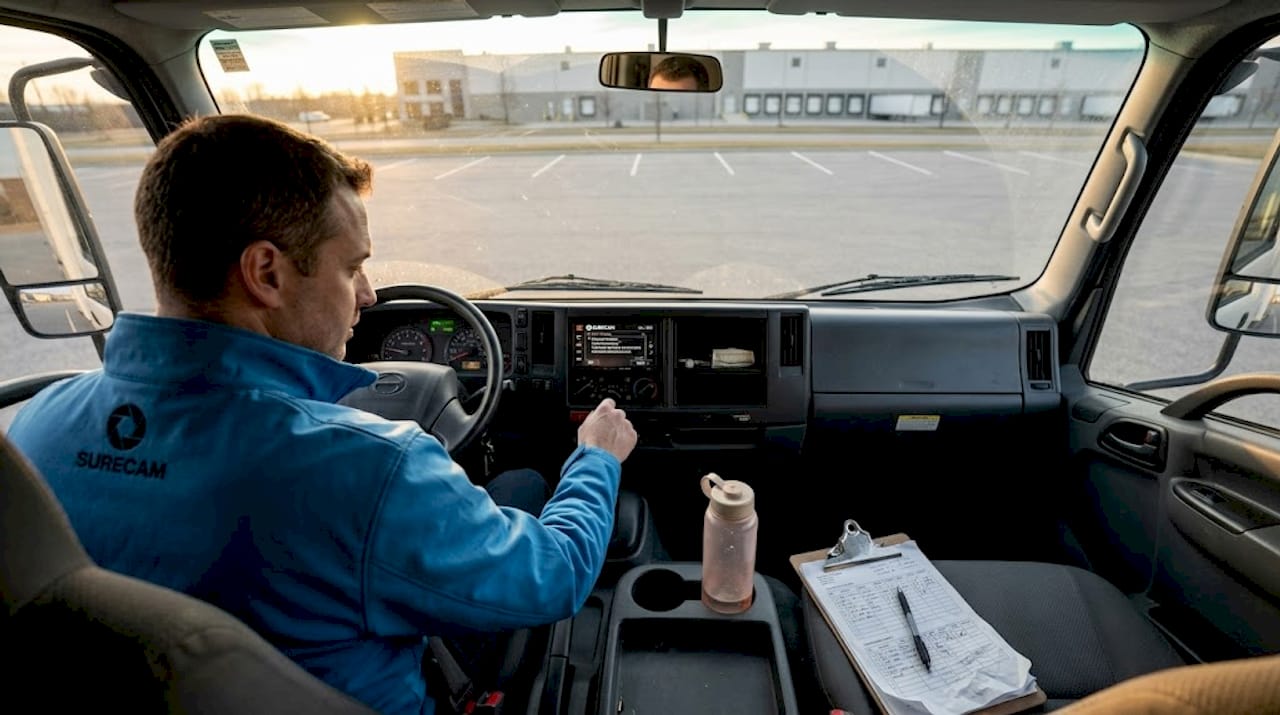
Statistic callout: Telematics-based driver feedback programs can lower fleet fuel consumption by 10 to 25%, according to federal fleet management guidance. For a fleet of 50 vehicles averaging 20,000 miles per year, even a 10% fuel reduction translates to tens of thousands of dollars in annual savings.
Action steps to reduce idle time and fuel use:
- Set idle time thresholds. Configure alerts when a vehicle idles for more than three to five minutes. Dispatch can contact the driver directly to investigate or redirect.
- Generate weekly idle reports. Pull per-driver and per-vehicle idle summaries. Identify patterns tied to specific routes, sites, or shift times.
- Implement anti-idle policies with data backing. When drivers see their own idle data, behavior changes faster than with policy memos alone.
- Track fuel card transactions against telematics data. Mismatches between fuel purchases and vehicle location flag potential fuel card misuse.
- Use route optimization to cut unnecessary mileage. Shorter, efficient routes reduce both fuel burn and wear.
- Benchmark fuel efficiency by vehicle class. Newer or better-maintained vehicles should outperform aging units; telematics data identifies which vehicles need replacement sooner.
Use fleet tracking to optimize costs as a practical reference for building out a cost-reduction strategy around your monitoring data.
Pro Tip: Pair idle time alerts with geofencing. If a vehicle is idling inside a known job site boundary, that context matters. An alert outside a geofence during off-hours is a much higher-priority issue and should trigger a different response.
Alongside efficiency, safety improvements hinge on proper follow-through.
Coaching, escalation, and measurable safety improvement
Data without action produces no safety benefit. This is one of the most important and most overlooked principles in fleet telematics programs. Safety effectiveness depends on follow-through: telematics data alone is insufficient if fleets do not act on it with structured coaching, training, and escalation processes.
"Empirical research supports that telematics-driven behavioral interventions, including incentives combined with feedback, can measurably reduce speeding frequency and intensity in real-world field settings."
This matters practically. A driver who receives automated speed alerts but never hears from a supervisor will often revert to prior behavior within days. A driver who receives a specific, video-supported coaching conversation tied to a real event, and who sees their safety score improve over time, is far more likely to sustain better habits.
Building an effective follow-through program involves several structured steps:
- Tiered coaching by severity: Minor events trigger automated in-cab alerts; moderate patterns trigger a supervisor review; serious or repeated violations escalate to formal coaching sessions.
- Positive reinforcement: Recognize drivers with consistently strong safety scores through public acknowledgment, bonus programs, or scheduling preferences. Incentive programs that reward low-risk behavior have strong empirical backing.
- Video-supported conversations: When coaching is tied to actual footage rather than abstract scores, drivers understand and accept the feedback more readily.
- Escalation paths for persistent risk: Repeated high-severity events should trigger formal performance management steps, not just more coaching calls.
- Trend tracking over time: Monthly safety score trends show whether individual drivers and the fleet as a whole are improving, plateauing, or regressing.
Review how video telematics for fleet safety can strengthen the coaching loop with objective, timestamped evidence.
There are, however, some important limitations and challenges.
Edge cases, privacy, and data limitations
No monitoring system operates perfectly in every environment. Privacy concerns, false positives, data security risks, and connectivity gaps can undermine program outcomes if not addressed in the design phase. Understanding these edge cases in advance allows fleet managers to build more resilient programs.
Common limitations and mitigation strategies:
- False positives from harsh event detection: A rough railroad crossing or pothole can trigger a harsh-braking or hard-impact alert with no driver fault. Reviewing video alongside event data prevents unfair disciplinary action.
- Network connectivity gaps: Rural routes, tunnels, and dense urban canyons can disrupt cellular data transmission. Systems with onboard storage buffer and upload footage when connectivity is restored.
- Driver privacy concerns: Monitoring off-duty periods or personal use of company vehicles creates legal and trust issues. Clear, written policies limiting monitoring to work hours and company vehicles build driver confidence.
- Data security risks: Telematics platforms store sensitive location and behavioral data. Vendors should offer encrypted storage, role-based access controls, and regular security audits.
- Alert fatigue: Too many low-priority alerts overwhelm safety managers. Configuring meaningful thresholds and filtering noise keeps attention focused on genuine risks.
Pro Tip: Before rolling out a new monitoring system, hold a driver information session. Walk through what data is collected, how it is used, who sees it, and what it does not track. Transparency reduces resistance and builds the trust needed for the program to succeed long term. For more on balancing oversight with trust, the fleet dash cam privacy resource is a practical starting point.
With these limitations acknowledged, let's compare the advantages side-by-side.
Quick comparison: Vehicle monitoring advantages side-by-side
Connected vehicle data now supports near-crash detection and broader safety analytics that go well beyond basic location tracking, expanding what fleets can act on. The table below summarizes where vehicle monitoring delivers the clearest value. Explore dash cameras and telematics to see how integrated systems stack up against standalone GPS solutions.
| Advantage area | Primary mechanism | Measurable outcome |
|---|---|---|
| Driver safety | Behavior scoring, in-cab alerts, coaching | Fewer accidents, lower claims frequency |
| Operational efficiency | Idle tracking, route optimization, OBD data | Fuel savings of 10 to 25% |
| Regulatory compliance | Automated DVIR, ELD, maintenance logs | Faster audits, reduced violations |
| Risk mitigation | Event-triggered video, near-crash detection | Faster incident resolution, liability protection |
| Maintenance management | OBD fault alerts, mileage triggers | Reduced unplanned downtime |
| Insurance outcomes | Verified incident records, safety scores | Potential premium reductions |
For deeper context, here's a unique perspective informed by practical experience.
Why dashboard data is not enough: Lessons from real fleets
Many fleet programs invest heavily in hardware and software, then see disappointing safety outcomes after the first year. The root cause is almost always the same: teams treat the monitoring dashboard as the end product rather than the starting point.
Data sits in a platform. Results happen in the field. The gap between those two places is where most programs fail. A fleet manager looking at a weekly summary of 400 safety events cannot act effectively on all of them. But a structured process that prioritizes the top 10 critical events, assigns each to a supervisor, and tracks resolution to completion: that produces change.
There is also a persistent assumption that cloud-connected systems provide complete, uninterrupted coverage. They do not. Rural construction sites, underground utility work, and mountainous terrain all create connectivity gaps. Fleets that assume their data is always flowing miss events precisely when and where serious incidents are most likely. Onboard storage and redundant connectivity options are not optional upgrades; they are critical design choices.
The most effective programs follow a simple four-step cycle: document the event, interpret it in context, coach the specific driver with specific evidence, and verify that the behavior improves. Systems that support effective driver monitoring without overwhelming safety teams are built around this cycle, not just data volume. The hard lesson is that more data does not automatically mean better outcomes. Disciplined implementation does.
Bridge to action: Fleet monitoring solutions
Fleet managers who move from passive data collection to active safety programs consistently report better safety scores, lower insurance costs, and more efficient operations.
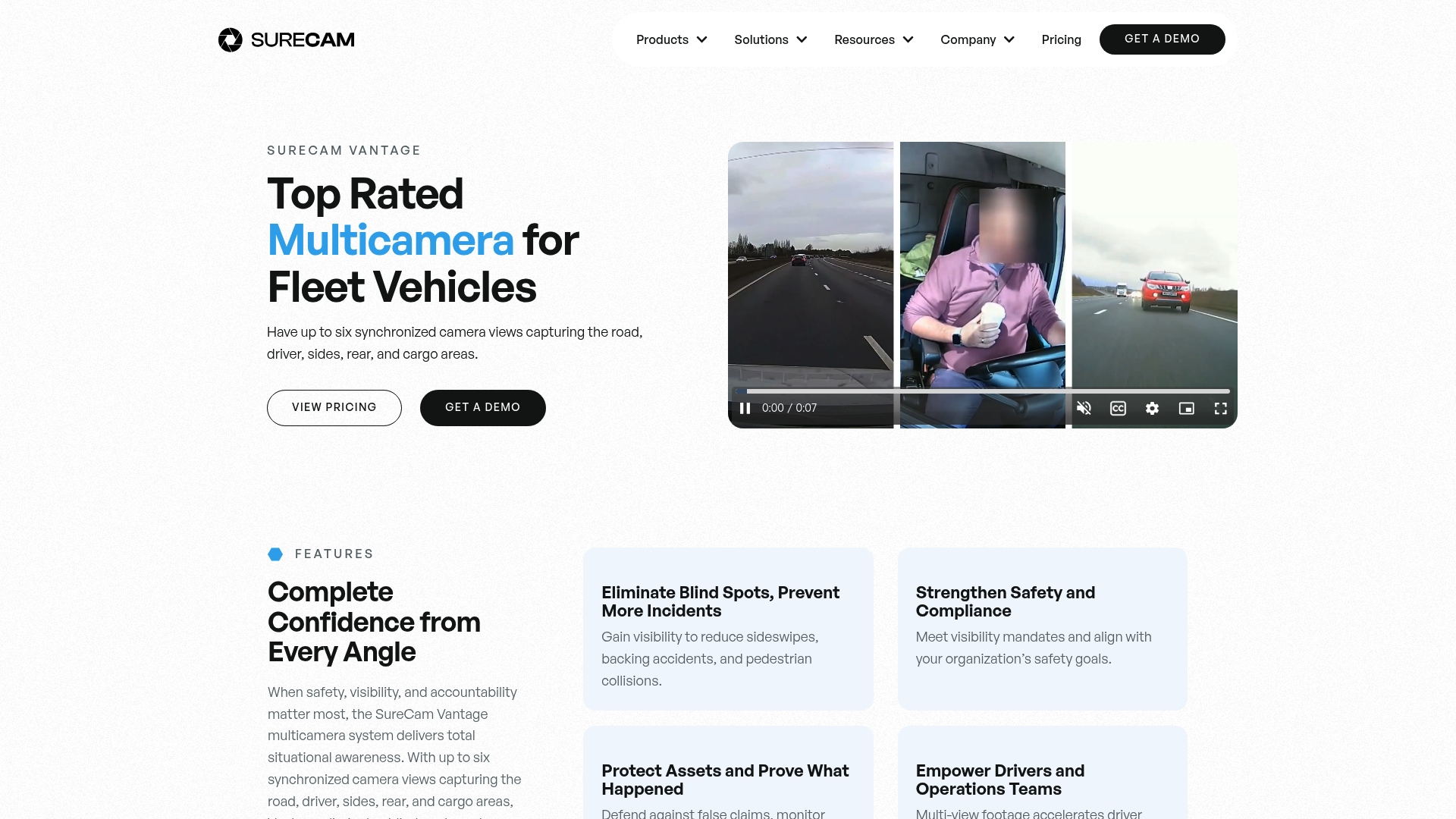
SureCam's fleet camera systems are built around this active model. Dual dash cam solutions capture both road and driver-facing video, giving safety teams the context needed for fair, effective coaching. GPS fleet tracking options extend visibility to location, routing, and real-time asset status. And dash cameras with telematics integrate video evidence with behavioral data in a single platform, closing the gap between raw data and actionable safety improvements. Contact SureCam to schedule a demo and see how the system fits your fleet's specific operational needs.
Frequently asked questions
How does real-time vehicle monitoring improve fleet safety?
Real-time GPS and OBD data enables faster interventions on unsafe driving patterns, supports proactive maintenance scheduling, and provides event-triggered footage for coaching and incident review.
Does vehicle monitoring help with regulatory compliance?
Yes. Automated documentation and behavior tracking replace manual paperwork with timestamped digital records, making DVIR completion, maintenance history, and driver behavior data immediately accessible for audits.
Can vehicle monitoring reduce fleet fuel costs?
Monitoring idle time and driver behavior can lower fuel consumption by 10 to 25% through real-time feedback, idle alerts, and route efficiency improvements.
What are the privacy concerns with vehicle monitoring?
Privacy risks include false positives, data security vulnerabilities, and driver mistrust; these are best managed through clear written consent policies, role-based data access, and transparent communication about what is and is not monitored.
How should fleet managers act on monitoring data?
Consistent coaching, escalation protocols, and incentive programs are the mechanisms that convert telematics data into measurable driver improvement; data review alone, without structured follow-through, rarely produces lasting change.