

Vehicle tracking has quietly evolved from a simple "find my truck" tool into a full-scale operational intelligence platform. Modern systems combine hardware, connectivity, and cloud software to deliver real-time data far beyond GPS location alone. For fleet managers and safety supervisors, this shift means you now have the tools to prevent accidents before they happen, cut fuel waste, and stay ahead of compliance requirements, all from a single dashboard. This guide breaks down exactly how modern vehicle tracking works, what data it delivers, and how to turn that data into measurable results for your operation.
Table of Contents
- Understanding vehicle tracking: More than just GPS
- Key data and dashboards: What gets tracked and why it matters
- Safety and compliance: Driving behavioral change, not just reporting
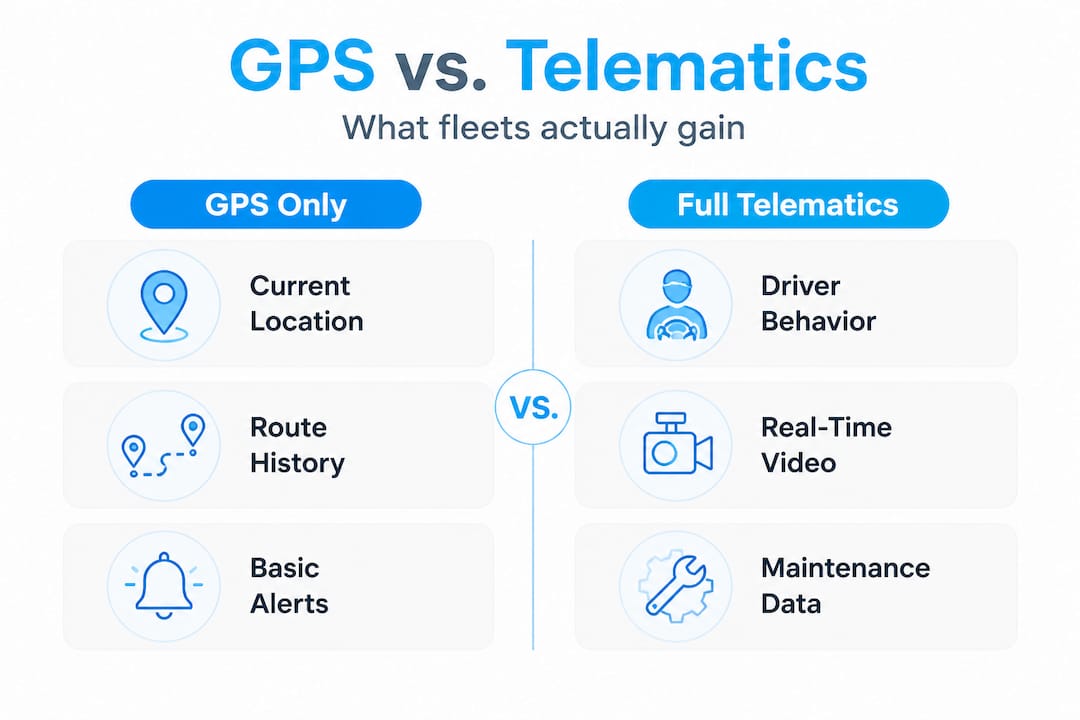
- Beyond location: Why advanced telematics outperforms GPS-only tracking
- What most fleet managers miss about vehicle tracking
- Take your fleet tracking to the next level
- Frequently asked questions
Key Takeaways
| Point | Details |
|---|---|
| Beyond basic GPS | Modern vehicle tracking delivers live fleet intelligence, not just vehicle locations. |
| Safety and compliance benefits | Telematics empowers managers to coach drivers and meet regulatory standards. |
| Data-driven improvements | Integrated tracking helps fleets reduce incidents, fuel costs, and unplanned downtime. |
| Right metrics, right results | Tailoring reports and alerts to your key outcomes is essential for real ROI. |
Understanding vehicle tracking: More than just GPS
Most people picture a blinking dot on a map when they hear "vehicle tracking." That mental model is about 15 years out of date. Today's systems are layered platforms that pull together hardware, wireless data transmission, and cloud-based analytics into one continuous feed of fleet intelligence.
How the hardware works
Every modern tracking setup starts with an onboard unit installed in the vehicle. This unit typically includes:
- A GPS receiver that logs precise location and movement
- A connection to the vehicle's OBD-II or CAN bus port for engine and diagnostic data
- A cellular modem that pushes data to the cloud in near real time
- Optional integrations for dash cameras, temperature sensors, or driver ID readers
Modern platforms collect both GPS and diagnostic data, transmitting it over cellular networks for near real-time access. That last point is critical. You are not waiting for a driver to return to the yard to download a log. The data flows continuously, which means you can act on it continuously.
What this looks like in practice
Imagine a delivery driver taking an unauthorized detour. A GPS-only system tells you the truck is off-route. An integrated telematics platform tells you the truck is off-route, the engine has been idling for 12 minutes, the driver applied harsh braking twice in the last hour, and a dashboard warning code just triggered. That is the difference between knowing where and knowing what is actually happening. Pairing dash cams and telematics takes this further by adding visual context to every data point.
| Feature | GPS-only tracking | Integrated telematics |
|---|---|---|
| Location data | Yes | Yes |
| Speed monitoring | Basic | Detailed with alerts |
| Driver behavior data | No | Yes |
| Engine diagnostics | No | Yes |
| Video footage | No | Yes (with dash cam) |
| Compliance reporting | Limited | Automated |
| Fuel efficiency insights | No | Yes |
Understanding GPS vs. video telematics is the first step in choosing the right system for your fleet's specific risk profile and operational goals.
Pro Tip: When evaluating tracking platforms, ask vendors specifically about OBD-II compatibility with your vehicle makes and models. Not all hardware reads all diagnostic codes equally, and gaps here can leave blind spots in your maintenance data.
Key data and dashboards: What gets tracked and why it matters
With a handle on the mechanics, let's look at what gets tracked and how it translates into actionable fleet insights. The sheer volume of data a modern telematics system generates can feel overwhelming at first. The key is understanding what each data type is actually telling you and what decision it should trigger.
Core metrics every fleet should monitor
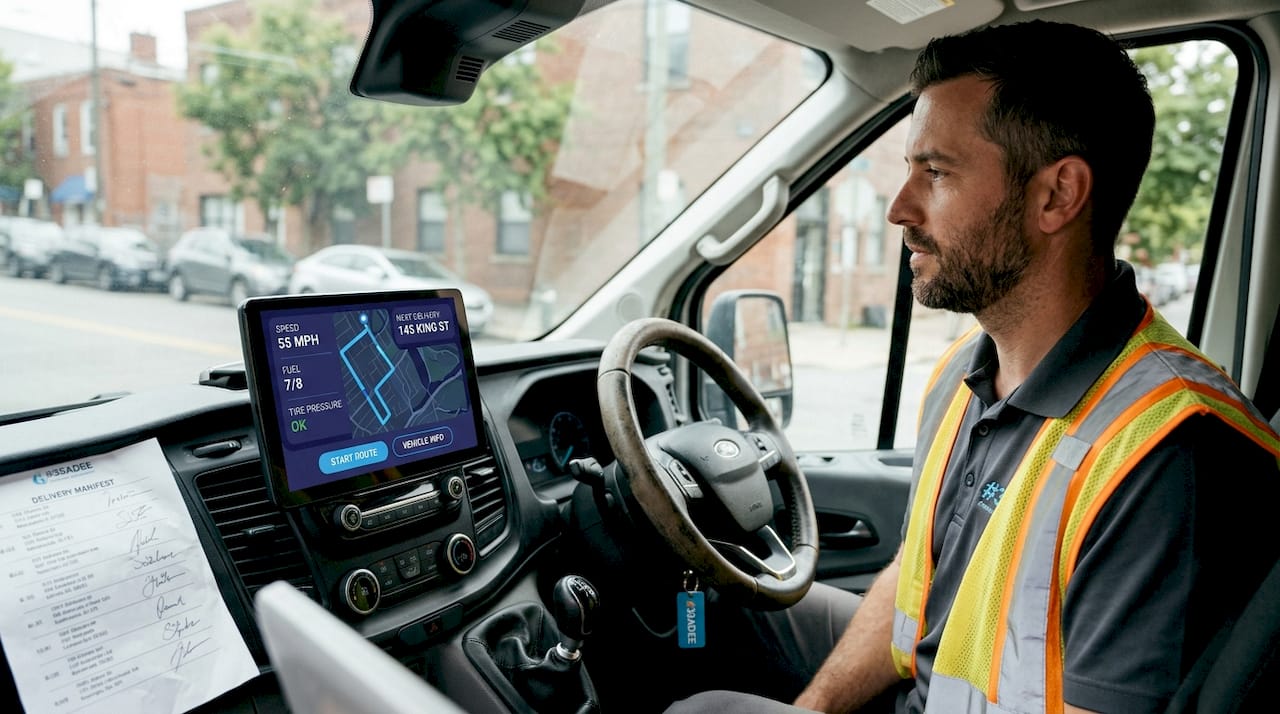
Telematics systems capture and transmit near real-time vehicle data including GPS location and diagnostics from OBD ports via a cellular network to cloud software, supporting both safety and efficiency goals. Here is what that looks like across the most important data categories:
| Data type | What it measures | Why it matters |
|---|---|---|
| GPS location and route | Real-time position, route adherence | Dispatch accuracy, unauthorized use |
| Speed | Actual vs. posted limits | Safety risk, insurance exposure |
| Idling time | Engine on, vehicle stationary | Fuel waste, emissions compliance |
| Harsh events | Hard braking, rapid acceleration, sharp cornering | Collision risk, vehicle wear |
| Seatbelt usage | Buckled or not at ignition | Driver safety compliance |
| Engine diagnostics | Fault codes, fluid levels, battery status | Preventive maintenance |
| Accident notification | G-force triggered alerts | Immediate incident response |
Each of these data streams serves a different operational purpose. Speed data, for example, is not just a safety metric. Drivers who consistently exceed limits also consume more fuel and put more wear on brakes and tires. Idling data tells you where your fuel budget is quietly leaking, often in parking lots and loading docks where drivers sit with the engine running for extended periods.
How dashboards turn data into decisions
The real power of modern tracking software is in the dashboard layer. A well-configured platform gives you a real-time fleet status view, showing every active vehicle, its location, speed, and any open alerts. But it also stores historical data so you can analyze trends over time. Did harsh braking events spike last Tuesday? That might correlate with a new driver's first week on a difficult urban route. Did fuel consumption jump 8% in October? Idle time data will tell you why.
Fleet dash cams add a visual layer to this data, giving you video clips tied directly to harsh event alerts. Instead of asking a driver what happened during a hard brake at 2:14 PM, you can watch it. That combination of data and video is what drives fleet safety improvements that go beyond theoretical benchmarks into real, measurable incident reduction.
Pro Tip: Set your alert thresholds based on your actual operational environment, not default settings. A harsh braking threshold appropriate for highway driving may trigger constant false alerts in stop-and-go urban routes, causing alert fatigue and reducing the system's practical value.
Safety and compliance: Driving behavioral change, not just reporting
Beyond numbers, advanced tracking translates directly to safer, more compliant fleet operations. This is where the technology earns its keep for safety supervisors specifically, because the goal is not just to document what went wrong. It is to prevent the next incident from happening at all.
How telematics supports proactive safety management
The traditional approach to fleet safety is reactive. An accident happens, you investigate, you retrain. Telematics flips that model. Real-time driver coaching flags aggressive events and generates accident notifications with data for immediate incident analysis, allowing managers to intervene before patterns become crashes.
Here is a practical sequence for using tracking data to drive behavioral change:
- Establish a baseline. Run your telematics system for 30 days without enforcement. This gives you accurate data on your fleet's actual behavior, not behavior modified by the knowledge of being watched.
- Identify your highest-risk drivers. Sort by harsh event frequency, speeding incidents, and seatbelt compliance. These are your priority coaching conversations.
- Set individual improvement targets. A driver with 40 harsh braking events per week needs a different target than one with 8. Personalized benchmarks drive more meaningful improvement.
- Schedule regular coaching sessions. Use the data as a conversation tool, not a punishment mechanism. Show drivers their trends, explain the safety and cost implications, and agree on specific behaviors to work on.
- Track improvement over time. Month-over-month trend data shows whether coaching is working and where additional support is needed.
"The most effective fleet safety programs use telematics data as a coaching tool rather than a surveillance tool. Drivers who understand why the data matters and how it connects to their own safety respond far better than those who feel monitored without context."
Compliance benefits that go beyond the checklist
For safety supervisors managing regulatory requirements, telematics dramatically simplifies compliance documentation. Driving hours, route records, vehicle inspection data, and incident logs are all stored automatically and are accessible on demand. When a regulator asks for records, you are not scrambling through paper logs. The data is there, timestamped and organized.
Safety management becomes significantly more structured when you have continuous data rather than periodic spot checks. You can identify compliance gaps in real time rather than discovering them during an audit. Pairing dash cameras with telematics also gives you video evidence that can protect your drivers from false claims, which is increasingly important as staged accident fraud continues to affect commercial fleets.
Key compliance areas telematics supports:
- Hours of service documentation
- Pre-trip and post-trip inspection records
- Incident reporting and reconstruction
- Speeding and moving violation history
- Seatbelt and safety equipment compliance
Beyond location: Why advanced telematics outperforms GPS-only tracking
Finally, let's address the growing industry expectation: knowing where your vehicles are is simply not enough anymore. The commercial transportation sector has moved past that baseline, and fleets still relying on GPS-only systems are leaving significant value on the table.
The GPS-only gap
GPS-only systems answer one question: where is my vehicle right now? They cannot tell you whether the driver is operating safely, whether the engine is about to need service, whether the vehicle has been idling for 45 minutes, or whether the route being driven is the most fuel-efficient option available. Each of those gaps represents a cost that compounds over time across an entire fleet.
Holistic data analysis consistently outperforms GPS-only tracking. One case study found that fuel, downtime, and compliance goals were only achieved through broader telematics integration, not location data alone. That outcome is consistent with what fleet managers across industries report when they make the switch.
What AI-powered telematics actually delivers
Modern platforms do not just collect data. They analyze it. AI-driven systems can identify patterns that a human reviewing raw data would miss, such as a subtle correlation between a specific route segment and elevated harsh braking events, or a gradual increase in idle time that signals a behavioral shift in a driver's routine.
| Operational area | GPS-only result | Telematics result |
|---|---|---|
| Fuel efficiency | No insight | Idle time and route optimization data |
| Driver safety | Location only | Behavioral scoring and coaching triggers |
| Vehicle downtime | No warning | Predictive maintenance via fault codes |
| Compliance | Manual logs | Automated, timestamped records |
| Incident response | Post-incident location | Real-time alert plus video reconstruction |
Telematics best practices consistently emphasize that the technology's value scales with how broadly it is deployed and how consistently the data is acted on. A system that generates alerts nobody reviews delivers the same outcome as no system at all.
The practical difference between GPS and telematics is not just technical. It is financial. Fleets that integrate full telematics platforms typically report measurable reductions in fuel costs, insurance premiums, maintenance expenses, and accident frequency within the first year of deployment.
What most fleet managers miss about vehicle tracking
Here is the uncomfortable reality: most fleets that invest in vehicle tracking underuse it significantly. They install the hardware, watch the map for a few weeks, and then let the system run on autopilot while the real value sits untapped in the data.
The biggest missed opportunity is treating vehicle tracking as a passive compliance tool rather than an active operations lever. The technology is capable of reshaping how your entire fleet operates, but only if you define what success looks like before you start measuring it.
Fleet managers should define the outcomes that matter most to their operation, because identical data can drive very different insights depending on how it is used. A construction fleet and a last-mile delivery operation might both track harsh braking events, but the thresholds, coaching responses, and operational implications are completely different. The data does not interpret itself.
The fleets that get the most out of tracking are the ones that build custom KPI frameworks around their specific operational risks. On-time performance rate. Collision frequency per 100,000 miles. Idle time as a percentage of total engine-on hours. Driver improvement score month over month. These are not generic metrics. They are tailored to what your operation actually needs to improve.
There is also a cultural dimension that technology cannot solve on its own. Drivers who understand the purpose of tracking and see it as a tool that protects them, not just monitors them, engage with coaching programs more effectively. Safety supervisors who use data to recognize improvement, not just flag violations, build teams that genuinely care about their scores. The technology creates the visibility. The leadership creates the change.
Fleet camera systems are most effective when they are part of a broader safety culture, not a replacement for one. The data tells you what is happening. Your response determines what happens next.
Take your fleet tracking to the next level
Advanced vehicle tracking is only as powerful as the platform behind it. If your current setup stops at location data, you are missing the safety coaching, compliance automation, and operational intelligence that modern telematics delivers.
SureCam's integrated telematics for fleet managers combines GPS-connected dash cams with AI-powered safety insights, real-time driver coaching, and cloud-based video storage, giving you everything covered in this guide in one connected system. Whether you manage five vehicles or five hundred, dash cams with telematics give you the visual evidence and behavioral data to reduce incidents, protect your drivers, and lower your insurance exposure. Explore camera systems for business owners to find the right configuration for your fleet's specific needs and industry requirements.
Frequently asked questions
What hardware is required for vehicle tracking?
Most systems require a GPS receiver, a vehicle interface such as an OBD or CAN port adapter, and cellular connectivity to send data to a cloud platform. Tracking systems typically combine onboard hardware, wireless connectivity, and a cloud dashboard with alerts.
How does vehicle tracking improve fleet safety?
Telematics enables real-time alerts, records aggressive driving events, and simplifies compliance documentation, allowing managers to coach drivers and respond promptly to incidents. Real-time coaching and flagging of aggressive events also generates accident notifications with data for incident analysis.
Is GPS-only tracking enough for commercial fleets?
GPS-only tracking generally lacks the analytical depth needed to improve safety, compliance, or fuel efficiency at a meaningful scale. Modern platforms emphasize that meaningful efficiency and safety outcomes require analyzing broader vehicle and driver data, not just location maps.
What metrics should I track to get the most out of vehicle tracking?
Focus on operational KPIs like dispatch accuracy, on-time rates, idle time percentage, incident frequency, and compliance outcomes that directly reflect your fleet's goals. Defining success metrics first is critical because the same tracking data can produce very different insights depending on how reporting intervals and alert thresholds are configured.